Things to Do in Glenelg, Adelaide: The Local Guide
From Glenelg Beach and Adelaide’s gardens to the hills and southern coast, this local guide maps out the city’s best outdoor escapes.
By Adelaide Spots · 19 June 2026
# Things to Do in Glenelg, Adelaide: The Local Guide
Glenelg is Adelaide’s classic seaside outing: an easy coastal escape with a long sandy beach, a historic jetty, Moseley Square and the busy stretch of Jetty Road behind it. It is also a useful base for understanding Adelaide more broadly. Within a day, you can move from the coast to city gardens, foothills bushland, dramatic cliffs and the Adelaide Hills. This guide starts in Glenelg, then follows the best nearby experiences by mood and landscape rather than pretending every attraction is in the suburb itself.
Start with Glenelg’s beach, jetty and tram
Glenelg Beach
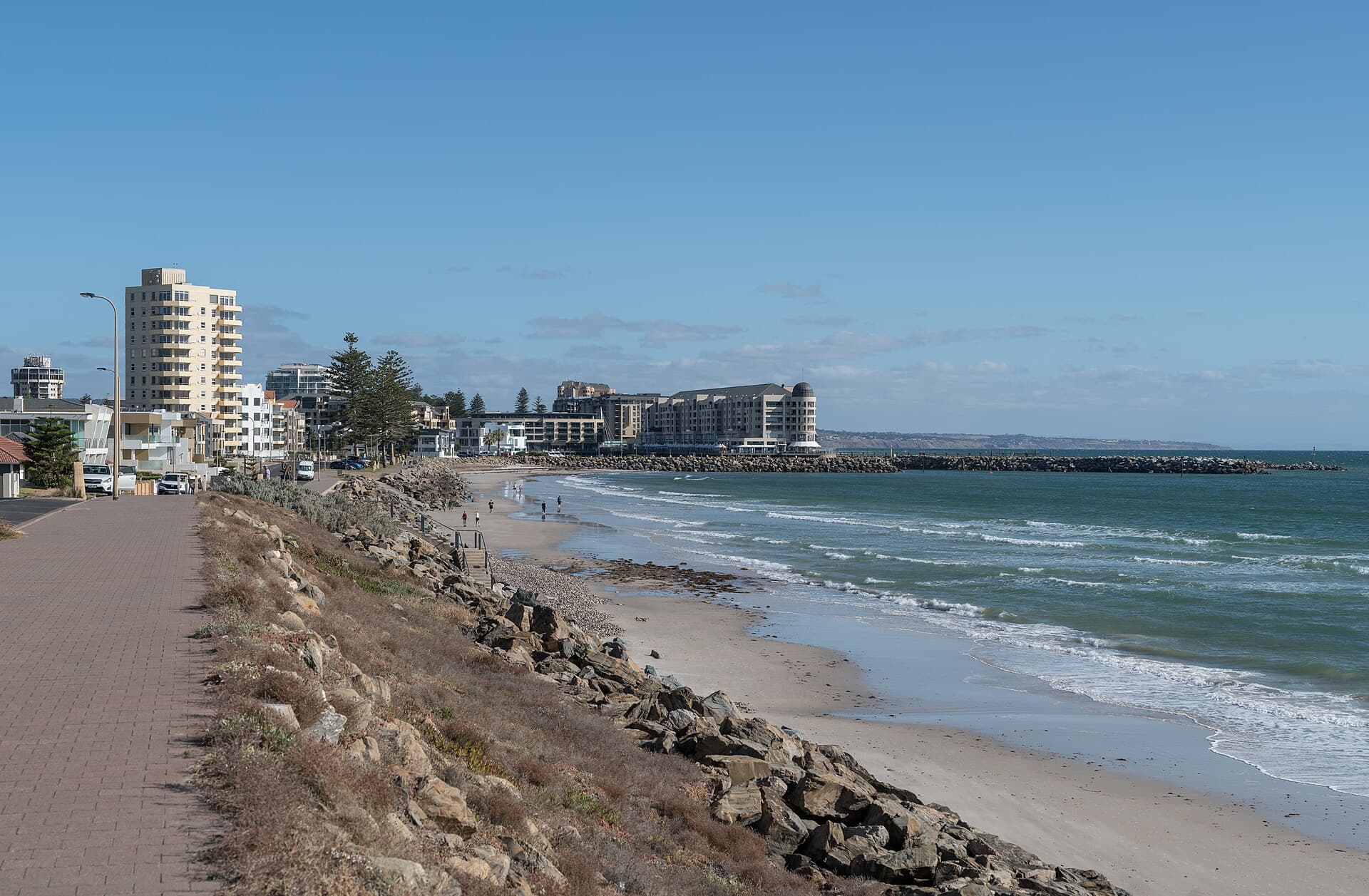
Glenelg Beach is the obvious first stop and remains one of Adelaide’s most dependable day-out destinations. The broad golden sand is only part of the appeal: the historic tram runs directly from the CBD, the jetty reaches out into the sea, and Moseley Square and Jetty Road provide plenty of places to eat, browse and pause between walks. It works for a straightforward beach visit, but also for a longer afternoon that combines the foreshore with the suburb’s shops, cafés and restaurants.
The tram makes Glenelg particularly easy if you are staying in the city and do not want to organise a car. Once there, the main attractions are close together, so the outing can stay pleasantly simple: arrive by tram, walk the sand and jetty, then follow Jetty Road for food or a drink. It is Adelaide’s most recognisable seaside experience for good reason, though its popularity means it is better approached as a lively coastal centre than as an undiscovered beach.
City gardens for an unhurried day
Adelaide’s parklands make it unusually easy to add greenery to a city visit. These spots suit a picnic, a slow walk or a break from the built-up centre, with each offering a different atmosphere.
Adelaide Botanic Garden
Adelaide Botanic Garden sits on North Terrace at the edge of the CBD and is one of the city’s great free attractions. Its sweeping lawns, ornamental lakes, heritage glasshouses and themed plant collections give you plenty to explore without needing to turn the visit into a strenuous walk. It is a strong choice when you want a calm, well-kept setting with more variety than an ordinary park.
The garden is also useful on a mixed city day because it sits on Adelaide’s cultural boulevard, close to other central attractions. Allow time to wander rather than treating it as a quick photo stop; the appeal is in the changing collections, open spaces and quieter corners.
Botanic Park
Next door, Botanic Park has a more open, relaxed character. Plane-tree avenues and towering Moreton Bay figs create a broad canopy over lawns and paths, making it a favourite place for picnics, walks and sitting outdoors. The park is worth choosing when the aim is simply to spend time outside, rather than follow a formal garden route.
Its position alongside the Adelaide Botanic Garden makes the two easy to combine, but they offer different experiences: the garden is about plant collections and designed spaces, while Botanic Park gives you room to slow down beneath some impressive mature trees.
Adelaide Himeji Garden
For a smaller and more contemplative garden, visit Adelaide Himeji Garden on the southern edge of the city centre. Gifted by Adelaide’s sister city of Himeji, it is a traditional Japanese garden combining two classic Japanese styles. The composition is deliberately serene, with a strong sense of order and quiet despite the surrounding city.
This is best treated as a short, attentive visit rather than a place to rush through. It offers a very different kind of green space from Botanic Park’s open lawns: intimate, carefully arranged and suited to a peaceful pause.
Rymill Park (Park 14)
Rymill Park (Park 14), on East Terrace near the East End, is centred on an ornamental lake and includes rowboats, a rose garden, open lawns and shaded paths. It is a good option when you want accessible parkland with a few features to give the walk a destination. The lake changes the feel of the place, while the lawns and paths leave room for a relaxed, unstructured afternoon.
Bushland, wildlife and the hills
When you want more distance from the city, Adelaide’s foothills provide bushwalking, heritage and broad views without requiring a major expedition.
Morialta Conservation Park
Morialta Conservation Park in Mitcham is a substantial bushland escape, with creek lines, woodlands, gorges and waterfalls creating a convincing sense of being away from the city. Entry is free and the park is open daily, making it one of the more flexible choices here: suitable for a short nature break or a longer day outdoors.
The landscape changes with the seasons, with winter and spring especially rewarding when water and greener conditions can add to the experience. Come for the combination of walking and scenery rather than a single attraction; the gorges, creek corridors and woodland are what make Morialta feel substantial.
Belair National Park
Belair National Park, on Upper Sturt Road near Mitcham, has the distinction of being South Australia’s first national park, established in the 19th century. It is close enough to Adelaide for a practical half-day or day trip and offers a mix of bushwalking, picnicking and opportunities to spot native wildlife.
Its historical status adds context, but the main reason to go is the chance to spend time in the hills without travelling far from the city. It suits visitors who want a broad outdoor setting rather than a tightly programmed attraction.
Cleland National Park
Just below Mount Lofty Summit, Cleland National Park combines native bushland and walking trails with the well-known Cleland Wildlife Park. That combination makes it particularly useful for families or visitors who want Australian animals alongside a proper hills landscape, rather than choosing between a wildlife visit and a walk.
The natural setting is central to the experience. Cleland is not simply an animal attraction placed indoors; the surrounding parkland and trails are part of what makes the visit distinctive.
Carrick Hill House Museum & Garden
Carrick Hill House Museum & Garden in Springfield offers a change of pace from the national parks. This grand English-style house is preserved much as it was, with art and furnishings inside, while the estate extends into gardens, woodland and a sculpture trail.
It is worth visiting for the unusual combination of heritage house and outdoor setting. You can spend time with the collection and architecture, then continue through the grounds, making it a rewarding choice when you want culture without giving up a garden walk.
Mount Lofty Summit
For the broadest outlook, head to Mount Lofty Summit near Crafers. It is the highest point in the Mount Lofty Ranges, and the lookout takes in Adelaide, the plains, the coast and the gulf beyond. The view is the reason to make the trip: it gives a clear sense of how the city, coast and hills fit together.
Visit during the day for the full geography, or later when the city lights become part of the panorama. Either way, the summit offers a high-reward stop with very little interpretation required—the view does the work.
South-coast scenery and coastal walks
The southern coast is where Adelaide’s beach landscape becomes more geological and historic. These destinations are best approached as outings beyond Glenelg, not quick add-ons to a beach day.
Port Noarlunga Beach
Port Noarlunga Beach pairs a long stretch of golden sand with a famous jetty and the Port Noarlunga Reef just offshore. The protected reef is the major draw, with snorkelling and diving, an underwater trail and abundant marine life. Even if you are not getting in the water, the jetty and coastal setting make it a worthwhile beach visit; for swimmers and snorkellers, the reef is the reason to prioritise it.
Port Willunga Beach
Port Willunga Beach on the Fleurieu Peninsula is about an hour south of Adelaide and is one of South Australia’s most atmospheric beaches. Dramatic limestone cliffs, clear water, the weathered timber posts of the historic jetty and the offshore wreck of the Star of Greece give it a strong sense of place and history.
It is worth the longer drive for scenery rather than convenience. The cliffs and remnants of the jetty make this a beach to explore visually as well as a place to sit by the water.
Hallett Cove Boardwalk
The Hallett Cove Boardwalk follows the dramatic coastline of Hallett Cove Conservation Park, passing ancient rock formations, sculpted cliffs and the striking Sugarloaf. The site is one of Australia’s most significant geological landscapes, revealing hundreds of millions of years of Earth’s history.
This is the choice for a coastal walk with substance beyond the view. The boardwalk turns the cliffs and rock formations into the main story, so allow time to look at the landscape rather than treating it as a simple headland stroll.
A practical way to plan the day
For a first Adelaide visit, Glenelg is the easiest coastal starting point: use the historic tram from the CBD, then keep the beach, jetty, Moseley Square and Jetty Road in one outing. For gardens, pair Adelaide Botanic Garden with Botanic Park, and choose Himeji Garden when you want something quieter and more contained. Rymill Park works well as an East End park stop.
The hills and southern coast need more deliberate planning. Check current park information before leaving, particularly for access and walking conditions, and wear footwear suited to trails rather than relying on beach sandals. Morialta, Belair and Cleland are better when you can give them proper outdoor time. Mount Lofty Summit is the natural viewpoint to add to a hills day, while Port Noarlunga, Port Willunga and Hallett Cove each deserve to be treated as separate coastal outings. Most importantly, do not confuse proximity on a map with a quick hop: Adelaide’s best landscapes are spread from the city coast to the foothills and well south of Glenelg.
Featured spots
More Adelaide guides
 roundup
Adelaide Nightlife: The Best Bars & Live Music
From CBD cocktail bars and live-music pubs to wine bars in North Adelaide, Glenelg and Hahndorf, find the right Adelaide night out.
Read guide →roundupFree Things to Do in Adelaide
From botanic gardens and hilltop views to beaches, bushland and geological trails, these are Adelaide's best free and low-cost outdoor escapes.
Read guide →roundupAdelaide With Kids: Family-Friendly Things to Do
From city gardens and calm beaches to wildlife, waterfalls and reef snorkelling, these are Adelaide's best family-friendly days out.
Read guide →